
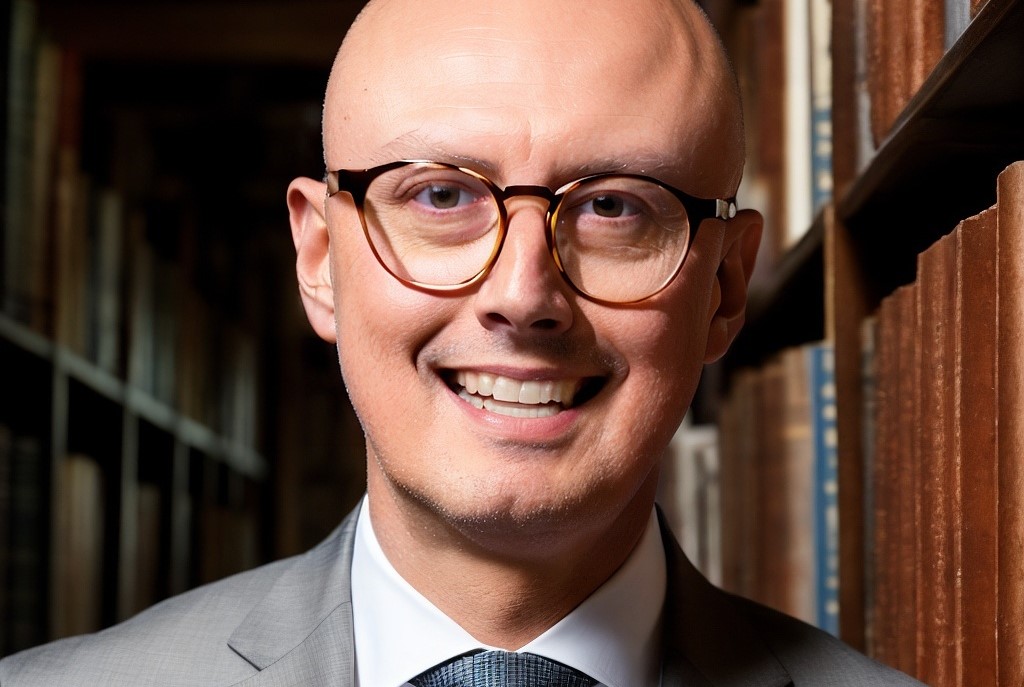
Recently I spoke with Norm Allgood, who founded Synergis Education, before going on to found Next Phase Education, a consulting firm that empowers higher education institutions to achieve sustainable growth and long-term success. Norm’s journey began in Detroit, growing up in a working-class family and serving in the Army before pursuing higher education as an adult. In this interview, Norm shares insights from his entrepreneurial journey, focusing on community impact and helping people and institutions thrive. He emphasizes purpose over profit, the importance of identifying and mentoring talent, embracing technology like AI as a force multiplier, and pushing through challenges with grit — advice he shares for aspiring entrepreneurs looking to make a meaningful difference.
From Detroit to Education Innovation — The Journey Begins
Griffin Connolly: Welcome Mr. Allgood, let’s jump right in. Tell me a little bit about yourself and your background and education.
Norm Allgood: My story really starts in Detroit. I was born and raised there, grew up in a working-class family, and went through Catholic schools — St. Suzanne’s, Our Lady of Grace, Bishop Borges. Right after high school, I headed straight into the military.
I didn’t earn my degree until after my time in the Army. By then I was married, had a family, and went to school at night and on weekends. I earned my bachelor’s degree at 31 and my master’s at 39. My wife followed a similar path, and that experience really opened both our eyes to the world of adult education — how higher ed institutions were starting to adapt to serve students like us who were juggling work, family, and school.
That’s what led me into the education space. In 2001, I joined a company called the Institute for Professional Development, which has been around since the early 1970’s and was the first company of Apollo Group. So, I’ve been in this space for about 25 years now. I’m passionate about it because I lived it — I was an adult learner myself, and these programs changed my life. That experience led me to found Synergis Education, later sell it, and eventually start my current company, Next Phase Education.
Seeing the Gaps — The Birth of Synergis Education
Griffin Connolly: You have such an interesting journey. Take me back to leaving your job, which was with Orbis at the time I believe, and launching into entrepreneurship with Synergis Education. Where were you at and what were your motivations?
Norm Allgood: I saw some big gaps in what universities were offering, especially for adult learners and career changers. I was particularly focused on students who already had a bachelor’s degree — maybe in political science, education, or history — but weren’t getting any real economic return from it.
Universities weren’t adapting fast enough for that group. I kept thinking about economic viability — the idea that if you invest a certain amount in a degree, you should be able to earn that back at least twice over within your first year after graduation. Not every degree met that test, for either the student or the institution.
That’s where I saw an opportunity, specifically in nursing education. Traditional programs weren’t cutting it for career changers. At Orbis, we had an Accelerated Bachelor of Science in Nursing (ABSN) program that helped students get into nursing faster. But the issue was financial: most of these students already used their federal aid for their first bachelor’s, so when they tried to fund a second one, they ended up buried in debt.
So, I designed something different: a Direct Entry Master of Science in Nursing. Students with a bachelor’s in another field could take five or six prerequisites — anatomy, physiology, microbiology, chemistry, statistics — and then enter a 20-month master’s program. Because it was a graduate program, they qualified for graduate-level financial aid.
When they graduated, they were floor-ready nurses earning $75,000–$85,000 a year, and the total program cost was around $45,000–$55,000. They received about $21,500 per year in federal aid rather than taking out high-interest loans. That’s what I mean by an economically viable degree. The math made sense for everyone.
I launched 10 of these programs across the United States. And we didn’t stop there — we saw another gap at the doctoral level. To address the shortage of qualified faculty, we developed a Dissertation Day One Doctor of Education program. Instead of finishing coursework first and then struggling to complete the dissertation, which 65% of students never do, they started the dissertation from day one. Within 24 to 30 months, they graduated with their doctorate, ready to become school administrators or teach in higher education. We had the same program for nursing graduates. This was a huge win for nurses that did not want a DNP but instead wanted to learn how to teach.
These programs created faculty pipelines for nursing, education, and other fields that desperately needed them.
Building a Sustainable Model — Helping Schools Stay Alive
Griffin Connolly: So, when you say you founded 10 programs nationwide, were those individual companies, or were they all operating under the same umbrella?
Norm Allgood: They were all part of Synergis Education. What we did was form long-term partnerships with existing universities. Places like La Roche in Pittsburgh, Gwynedd Mercy in Philadelphia, Avila University in Missouri, and Alverno College in Milwaukee.
Each of these schools already had nursing programs, but we helped them expand and modernize. In some cases, we provided smart capital to build out new learning centers, like simulation and skills labs for hands-on training. We helped them navigate all the regulatory and accreditation hurdles with state nursing boards and higher ed authorities.
Our team worked alongside their faculty. They brought subject expertise, and we brought instructional design and strategic planning. Once the program was ready, we handled the marketing and recruitment side, finding qualified students who’d already completed their prerequisites and met all requirements.
Then, we handed those applications to the universities. They admitted the students, and we supported the operation from there. Each program would start 120 to 150 students per year, divided into three cohorts — January, May, and September. Twenty months later, those students were walking across the stage as new nurses.
And there was a deeper purpose to all of this. Coming from Detroit, I watched nearly every Catholic elementary and high school close, except one. That stuck with me. Seventy percent of the universities we partnered with were small to mid-sized Catholic institutions. Schools people hadn’t heard of but that played a vital role in their communities. These programs became their lifeline, creating a working endowment to keep those institutions open and thriving.
That’s what really motivated me. Not just helping students build new careers but helping the schools themselves survive and stay relevant.
Building Community Through Education
Griffin Connolly: One of the things I’m focusing on in entrepreneurship is community. You’re operating in both the education and healthcare sides of the entrepreneurial space. Can you expand on what community means to you and how it shows up in your work?
Norm Allgood: Community is really everything. It’s the heart of what we do. When I think about community, two things always come to mind: economic viability and impact.
First, economic viability is crucial because it protects the community. You don’t want to saddle people with debt from degrees that don’t pay off. When students take on financial burdens they can’t recover from, it doesn’t just hurt them — it affects their families, their local economies, and the communities they serve.
Second, it’s about helping our partner universities and the students they educate. Think about nursing, for example. When you were born, a nurse was probably one of the first people to care for you. When we pass, nurses are often there, too. Throughout our lives, they’re part of our most human moments.
So, from a community standpoint, I’m helping someone go from being a barista at Starbucks or a lab tech making $45,000 a year to becoming a nurse earning $80,000 and serving others every single day. That one person’s transformation creates ripple effects. It changes their family’s opportunities, uplifts their community, and fills a crucial role in healthcare.
And it doesn’t stop there. Our doctoral-level programs train educators who go on to teach, lead, and multiply that impact. They carry that sense of service into classrooms, hospitals, and communities across the country.
Lately, my focus has been on partnering with Catholic universities, though I work with many other institutions, too. The alignment with Catholic hospitals is especially strong since so many were founded by religious orders like the Sisters of Mercy. There’s a deep historical connection there. A shared mission of service, compassion, and care. That’s the kind of ecosystem I want to build: one that sustains itself by giving back.
The Formula for Economic Viability
Griffin Connolly: You’ve mentioned the term “economically viable” a few times now. When you were developing your business plan, did your team have a specific strategy or formula for determining whether a school or program was truly economically viable?
Norm Allgood: We did, and it was both financial and mission-driven.
First, when partnering with small to mid-sized universities, we had to make sure they were financially stable enough to take on the collaboration. Many were already in tough spots because, as I like to say, they didn’t “fix the roof while the sun was shining.” Before signing any agreement, I’d review the Department of Education’s financial responsibility scores and the school’s financial statements. That gave me a sense of their overall health.
However, financials weren’t enough. The institution also needed motivation. A genuine desire to serve adult learners or career changers. This work only succeeds when the mission aligns with the model.
Once that alignment was clear, we’d conduct detailed market research in the surrounding area. We’d look at the total cost of earning the degree, not just tuition, but fees, living expenses, everything. Transparency was key. I never wanted a student to think a program cost $45,000, only to discover another $11,000 in hidden fees later. That’s not sustainable, and it’s not right.
We customized our approach to each location. For example, when we worked with North Park University in Chicago, we encouraged the school to renovate old seminary housing for nursing students who were moving from out of state. That kept living costs low and made the program more accessible.
By contrast, in states like California, the same nursing degree might cost between $85,000 and $150,000. It’s outrageous. Those students graduate with mountains of debt, but their starting salary is the same as nurses elsewhere, around $85,000 to $90,000. The math doesn’t work.
Our programs, on the other hand, averaged around $55,000 to $61,000 in total costs, and students could receive up to $43,000 in federal financial aid. They were walking out of school earning more in their first year than their entire program cost. That’s what economic viability means to me.
We even saw students moving from California to other states just to enroll. About 30% of our students were Californians looking for a smarter option. Their state’s inflated prices were doing them a disservice. I’ve always believed that if you’re in education, you have a moral responsibility to make sure what you offer makes sense.
It’s not just about the numbers. It’s about dignity, sustainability, and integrity.
Moving On and Starting the Next Chapter
Griffin Connolly: I understand that just last year you moved on from Synergis to start Next Phase Education. Can you expand a little bit on what it was like to move on from something you devoted so much of your life to? How did you decide it was time for the next step?
Norm Allgood: That was one of the hardest transitions of my career, honestly. I started Synergis back in 2011, built it from the ground up, and eventually sold it in 2022. I stayed on to run it through 2024, but the minute the sale went through, I could tell things were going to change.
The new owners were kind people, but they weren’t entrepreneurial, not in the way I am. They haven’t really done anything new with Synergis. No new DEMSN programs, no growth. It’s hard to watch something you have poured so much of yourself into just sit still. But that’s part of the process. Once you sell, you have to accept that you’re no longer the in the driver’s seat.
Before I even officially left, though, my phone started ringing. Colleges and universities I’d worked with for years were calling looking for support. I had to be careful because of my non-compete. But I saw an opportunity.
So, I hung my shingle as an educational consultant and started working directly with institutions, helping them think through strategy. Over the years, I’d built strong relationships with excellent vendors that I could now deploy to different colleges and universities, whether it was marketing, fee-for-service operations, specialized curriculum development, or regulatory compliance.
I realized I could now connect these dots for schools. Instead of depending on an outside online program manager (OPM) and giving away a huge portion of their tuition revenue, I could show them how to build and manage programs themselves using these trusted partners. It was empowering for them and fulfilling for me.
That’s really what Next Phase Education is all about: helping universities take control of their own growth, innovate smarter, and stay mission driven.
Recently, we’ve also become thought leaders in the AI space. I just wrote “The 10 Pillars of AI Enablement: How Artificial Intelligence Is Transforming Higher Education.” which has just been released.
That’s where my head is these days. Thinking deeply about what’s next for higher education, how AI will reshape learning, and how schools can adapt. Next Phase Education is my platform to do that. To keep innovating and shaping the future of education in a sustainable, forward-looking way.
AI as a Force Multiplier in Higher Education
Griffin Connolly: That’s actually a perfect transition, because the next thing I wanted to ask you about is AI and the role it played in your launch of Next Phase Education. Can you expand on that a bit, and the effect of AI on the education space as a whole?
Norm Allgood: AI has changed so much. From an education standpoint, the institutions that will win are the ones not trying to keep it out of the classroom. Too many are spending enormous amounts of time trying to catch people using AI instead of asking how it can improve their product and efficiency.
AI is what I’d call a force multiplier, which is a term from my military background. People often say AI will replace everything, but it won’t. What it really does is make us super-efficient. Those who embrace it will run circles around those who don’t. Just like the people who first learned Excel, Word, and PowerPoint did years ago.
Imagine developing a curriculum once for a specific program, knowing you have 10, 15, or even 20 different types of learners coming into your classroom. With AI, you could take that same curriculum and customize it. Achieving the same learning objectives, but through different learning paths. If a student is more tactile or hands-on, for example, AI could help create lessons tailored to that style.
Before AI, that kind of differentiation would require handing the curriculum to instructional designers, reworking it with subject-matter experts, and spending $75,000 to $100,000 per course. Doing that across an entire program could cost millions. AI makes that process not only faster but affordable.
AI’s potential is enormous, and we’re only beginning to scratch the surface. It’s an incredible tool.
Griffin Connolly: Do you think schools can properly implement AI and have students utilize it without becoming over-reliant on it and losing genuine learning?
Norm Allgood: Yes, absolutely but only if it’s used correctly. I write about this in my book: we don’t have the luxury we did with online learning to wait 15 or 20 years to adopt it. We have months to a few years to integrate AI meaningfully. Colleges that dig in their heels will disappear. Those that embrace it and use it as a tool, not a crutch, will thrive.
It’s going to continue what I call the thinning of the herd. Schools that adapt will move forward; those that resist change simply won’t survive.
Looking Back at Lessons Learned
Griffin Connolly: As you look back on your career, are there any challenges or things that stick out to you that maybe you would have handled differently?
Norm Allgood: You know, I really don’t think so. And here’s why I say that, where I am today, and what I’ve learned along the way, all came from the exact path I took. In my next book, “Push, Push, Push, Never Quit”, I talk about that idea.
If I’d gone straight from high school into college, I wouldn’t be the same entrepreneur I am today. I wasn’t ready then. I needed the Army. It gave me discipline, perspective, and structure.
And if I’d started my education immediately after the Army instead of waiting until I was a little older and had a family, I wouldn’t have developed the same appreciation for adult learners. That experience taught me that higher education isn’t just about the traditional 18-year-old student anymore. The majority of learners today are adults coming back to school, and understanding their challenges shaped my entire approach to education.
Would I tweak a few things from my time starting Synergis? Sure, especially around the technical side of business, like cap tables and corporate structure. I would have built in better incentives for my executive team during the sale process. But that’s hindsight.
At the end of the day, not many companies can say they raised $45 million, built something meaningful, sold it for a 19.5x multiple, and lived to tell about it. Through it all, I truly believe the hand of God was on my shoulder. I’m grateful for every lesson along the way.
Purpose Over Profit: The Heart of Entrepreneurship
Griffin Connolly: That success definitely speaks for itself. I often hear from entrepreneurs that every challenge along the way helped shape who they are. What have you found to be most fulfilling about your pursuit of entrepreneurship?
Norm Allgood: You know, when you’re building, and you’re building for purpose, the money will come. But if you’re focused only on money, you’re going to fail. That’s just the truth.
You have to love what you’re doing. If you’re not passionate about it, or if you’re not surrounding yourself with people who have the potential to grow into great leaders, you’re not going to make it far.
I always compare it to what Brad Holmes is doing with the Detroit Lions. I’m a Detroit guy, so I love this example. He’s building through the draft instead of chasing expensive free agents. That’s the smart play. As an entrepreneur, you need that same eye for talent. Maybe someone isn’t a CIO or CFO yet, but you can see they could be.
When I look back, I see so many of the people I brought into Synergis thriving. They’ve gone on to leadership roles in other successful companies. And that’s the most fulfilling part for me: watching people I’ve mentored go on to do amazing things.
At the same time, I’ve been blessed with incredible mentors myself. Marvin Ellison, now the CEO of Lowe’s, was my mentor at Target. He went on to Home Depot, became CEO of JCPenney, and now leads Lowe’s. Getting to work with leaders like that shapes how you view talent. They all share one trait: they can see potential before it’s realized.
As a leader, if you don’t have that skill, you need someone close to you who does. For me, my wife was always incredibly helpful in identifying talent and integrity. Her instincts about people are almost never wrong. Having someone you trust like that by your side is invaluable.
Advice for Budding Entrepreneurs: Push, Push, Push — Never Quit
Griffin Connolly: I have one final question for you. I run a Student Launch Club at school — a group of high school students interested in entrepreneurship. You’ve had great success, so I’m curious: is there one piece of advice, or one key to your success, that you’d share with us?
Norm Allgood: The next book that I’m writing, it’s called “Push, Push, Push, Never Quit”, really captures the advice I would share. Entrepreneurs have to be able to do exactly that: push, push, push.
It’s an informal military term. When you’re under hostile fire, the people shooting at you are hoping you’ll hunker down, take cover, and stop advancing. And sometimes you have to pause, but what they’re not counting on is that you’ll push forward. That’s what throws them off.
Entrepreneurship works the same way. You have to push through adversity, and you have to have grit. You also have to know when to push. Sometimes it’s worth waiting 24 or 48 hours to let things settle, but you can never stop advancing. The minute you stop, you start to camp. You set up a tent, and people pass you by. Entrepreneurs are always pushing toward the next thing.
Griffin Connolly: I love that advice. Thank you so much for taking the time to talk with me today. I really appreciate it.
Norm Allgood: Of course, Griffin, it was my pleasure. Best of luck with all of your future endeavors.
Read last month’s interview with Beth Anderson here.