
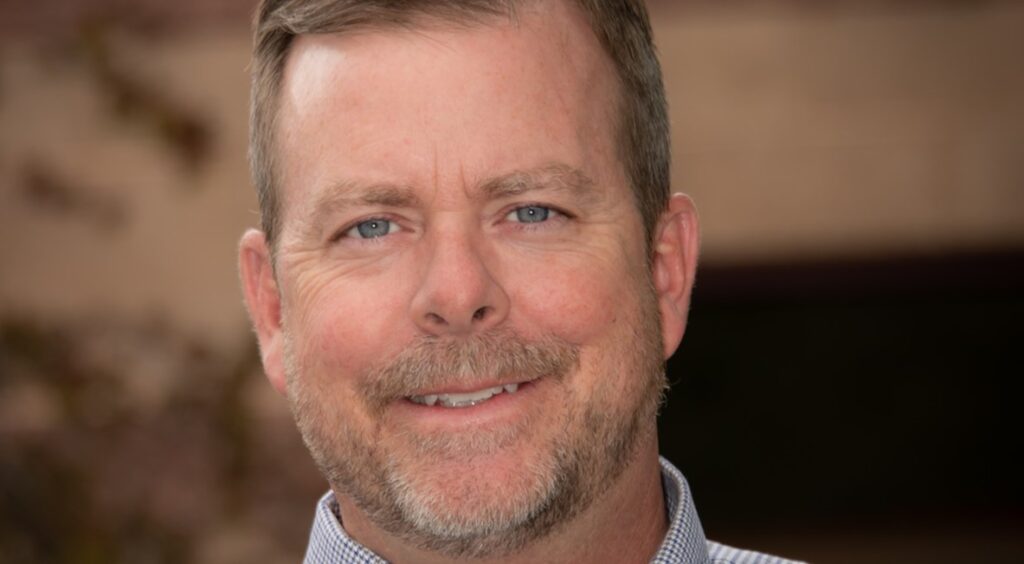
Recently, I spoke with Brian Rose, Deputy Director of Region 9 Economic Development District of Southwest Colorado. With a background in community banking and over a decade of experience supporting rural businesses, Brian helps entrepreneurs access funding and build more resilient local economies. He highlights the importance of community, the challenges of economic diversification in rural areas, and how trends like local food systems and changing consumer behavior are shaping the future of rural entrepreneurship. His key advice to aspiring entrepreneurs: “Dream big, but plan well”—especially when borrowing money, because having a clear path to revenue is essential for long-term success.
Building Foundations – Region 9’s Role in Rural Economic Growth
Griffin Connolly: Welcome Brain. Let’s start from the top. You are based in rural Southwest Colorado working with the Region 9 Economic Development District. Can you explain what that is and what you do in your role with them?
Brian Rose: Thanks Griffin. Region 9 is an independent nonprofit— a 501(c)(6). That makes us a little different from the typical nonprofits people are familiar with, like the 501(c)(3) organizations that focus on social services like feeding the elderly or youth programs. A 501(c)(6) is more aligned with economic development and regional planning, and has members of government serving on the board.
We really operate with two main goals in mind. One side of our work is focused on partnering with local governments—five counties, 17 municipalities, and two Native American tribes, the Ute Mountain Utes and the Southern Ute Indian Tribe—to identify and address challenges that are holding back economic growth. For example, we’re actively working on broadband development because internet access is a huge issue in many rural areas. We also do quite a lot of work with transportation, housing, and long-range economic development planning.
The other half of our operation—and this is what I focus on—is supporting small businesses and entrepreneurs. That work revolves primarily around providing access to capital. Rural areas typically don’t get the same level of capital investment as urban centers. That’s due to a combination of factors: lower population density, fewer businesses, and sometimes lower perceived returns. So rural regions end up being underserved when it comes to financial capital.
Right now, I manage a loan portfolio of just under $13 million, spread across about 250 businesses throughout our region. These loans are designed to help small businesses grow, expand, and create jobs. That’s crucial in areas like ours, where we’re not going to have tech giants like Amazon or Google opening offices. We have to grow our economy from within, supporting our mom-and-pop shops so they can thrive and bring employment to our communities.
Distinct from Region 9, at the State level, I serve on the Board of Directors for the Economic Development Council of Colorado. In that role I create a panel on entrepreneurship at the State Conference in October each year to promote resources and programs that are intended to help our businesses thrive.
Griffin Connolly: Before Region 9, you worked in banking. Can you talk a little bit about your background, what brought you to Region 9, and how your banking experience plays into your work now?
Brian Rose: Yes, I spent 15 years as a commercial banker in small community banks across rural Colorado. That experience really shaped my understanding of the local economy, but it also exposed some of the limitations of traditional banking—especially during economic downturns.
I was in banking during the 2008 recession, and after that, banks tightened up their lending criteria a lot. The regulatory environment became much stricter. In fact, in the few years after 2008, there was more new banking regulation passed than in the 70 years since the Great Depression. That kind of pressure forced banks to be more risk-averse. As a result, I found myself saying “no” to small business owners seeking capital more often than I wanted.
Eventually, that didn’t sit well with me. I’ve always had a passion for helping entrepreneurs. I wanted to be in a position where I could say “yes” more often. Region 9 offers that opportunity. Our philosophy is more flexible and less risk-averse. We understand that small businesses account for nearly 80% of job creation—and in rural areas, they’re the backbone of the economy. So instead of focusing purely on minimizing risk, we focus on enabling opportunity. We recognize that if we want our communities to grow and stay vibrant, we have to invest in the businesses already here.
The Power of Community in Rural Entrepreneurship
Griffin Connolly: Building off of that community angle—I’ve interviewed a lot of entrepreneurs down here in Phoenix, and the landscape is obviously very different. Can you expand on what community looks like in a rural setting, and why it’s so important to entrepreneurship—and to you personally?
Brian Rose: I’ve always believed that people like to do business with people. In smaller communities, it’s easier to actually see and connect with people regularly. That closeness really makes a difference.
Entrepreneurs aren’t just focused on delivering a great product or service. They’re also navigating labor laws, marketing, managing employees, and staying compliant with regulations—it’s a lot. It really does take a village to help a business succeed. That’s where community plays a crucial role. When entrepreneurs are deeply tied into their community, especially if their business is focused on the community, they naturally gain access to informal mentorship, support, and resources. That connectivity helps them stay resilient.
I attend a lot of local meetings—Chamber of Commerce events, business roundtables, economic development meetups—so I can be a familiar face and a known resource. I want entrepreneurs to know I’m accessible, that Region 9 is here for them, and that they can reach out whenever they need support.
Another big part of my job is watching what’s coming down from the state—new programs, legislative initiatives, economic incentives—and figuring out how to bring those dollars and opportunities into our local area small businesses. I act as a conduit, making sure those resources actually reach those that need, and are eligible to utilize, them. It’s all part of strengthening the community’s entrepreneurial backbone.
Griffin Connolly: That makes a lot of sense. On the topic of resources, I spoke with Natalie Horner a few months ago. She mentors through SCAPE and Startup Colorado. I know Region 9 works with La Plata County’s Economic Development Alliance as well. Can you walk me through how all those groups work together and what that support system looks like?
Brian Rose: Definitely. So, access to capital is one of the biggest challenges rural small businesses face. Region 9 actually created SCAPE—Southwest Colorado Accelerator Program for Entrepreneurs—about 10 or 11 years ago. We helped launch it to focus on companies that want to scale fast. SCAPE brings in equity investors—so businesses that go through the program might give up 10% to 25% of their ownership in exchange for, say, a $500,000 investment.
On the other hand, Region 9 offers loan capital. Loans are non-dilutive capital—businesses don’t give up ownership. They just borrow and repay. My funding tends to support startups or businesses looking for moderate, local expansion—less about fast growth and more about sustainable steps forward.
Then you’ve got Startup Colorado, which works across the state to help entrepreneurs develop their ideas and strengthen their plans. They’re more about early-stage support—fostering the concept and building connections.
And we can’t forget the Small Business Development Centers, or SBDCs. They’re part of a national network and provide free technical support: help with writing a business plan, financial forecasting, marketing strategies—that kind of thing. They’re a great first stop for someone exploring if their idea is viable and developing the plan to launch.
What’s important is that we all work in our own “swim lanes,” but we collaborate and refer businesses to each other constantly. That ties back into the community aspect. Our interconnectedness is what makes our rural entrepreneurial ecosystem work. It’s not about competition—it’s about coordination. And ultimately, that helps businesses grow stronger.
Diversifying the Rural Economy
Griffin Connolly: Organizations like Region 9 are focused on building a healthy, inclusive economy. I know diversification plays a role in this—can you expand on what that means and how it plays a role in rural economic development?
Brian Rose: Most rural towns in Colorado rely heavily on tourism. It brings in a lot of jobs every year, but those jobs often aren’t the highest paying. And more importantly, if something disrupts tourism—like COVID did—then the local economy can crash almost overnight. So, one of our big goals at Region 9, especially through our loan program, is to promote economic diversification.
What that really means is spreading out the economic base so it’s not all riding on one industry. If tourism slows down, we want other sectors to be strong enough to carry the community. A great example is our recent focus on growing the logging and forest treatment industry. Over the past five years, there’s been a big push to reduce wildfire risk by thinning forests. That initiative brought in federal and state funding, which I’ve been able to use to make loans to local businesses—either to loggers working in the woods or to companies that process the timber after it has been harvested.
That’s led to real growth. We’ve got businesses like Timber Age Systems, which uses locally harvested wood for building materials—companies that wouldn’t have been viable here ten years ago before logging was happening. We’ve also got a plywood factory, an excelsior plant, and other wood-product businesses employing dozens of people. It’s a whole new layer of our economy.
We also love supporting export businesses—companies based here but selling their products nationally or globally. A couple of good examples of this are Osprey backpacks in Cortez, or Zuberfizz and Rocky Mountain Chocolate Factory here in Durango. They’re creating local jobs and bringing in revenue from outside the region. That kind of income isn’t tied to tourism, and it helps build long-term resilience.
Overcoming Challenges and Embracing the Rewards
Griffin Connolly: In a rural town, creating economic diversity is especially difficult. What other challenges do you and Region 9 face supporting rural economic communities?
Brian Rose: One of the biggest challenges right now is housing. Let’s say a company wants to move here and they’re planning to hire 100 people—maybe it’s a manufacturing company with half the jobs being minimum wage or just slightly above. The reality is, in some of our communities, those workers simply can’t afford to live here because housing costs are so high. That becomes a huge barrier.
So, we’re actively working on that with the government-support side of Region 9. We’re looking at what kinds of programs local governments can create and how they can access funding to make housing more affordable. The goal is to bring down the cost enough so people can actually live where they work. Without that, it’s tough to grow or attract businesses.
Another big issue is workforce. It’s not just about having enough people—it’s about having the right people with the right skills. For example, even if a big tech business wanted to relocate here, there might not be enough qualified workers to fill their roles. And being far from any major metro areas means we don’t have the luxury of a large commuting workforce either. So, in that example, we’d need to partner with places like Fort Lewis College or Pueblo Community College to create specialized training programs.
Whether it’s tech jobs or skilled trades, we’ve got to ensure that the talent pipeline is there. Housing and workforce—those are probably the two biggest structural challenges we face in the rural space.
Griffin Connolly: Absolutely. And on the flip side, with all the hard work you’re doing, what would you say is the most fulfilling part of your job?
Brian Rose: Without a doubt, it’s getting to help people make their dreams come true. A lot of folks come to us after years of working for others, ready to take a chance on their own business. When we’re able to say “yes”—whether it’s through our loan program or helping connect them with a state program to secure a grant or other funding—there’s so much joy in that. Seeing their excitement as they take the next step, whether they’re launching or growing, that’s what gets me excited every single day.
How Business Trends Are Shifting in Rural Areas
Griffin Connolly: The whole entrepreneurship space is changing fast with AI and new tech. What trends do you see in the rural entrepreneurial landscape now that are different from when you first started with Region 9?
Brian Rose: That’s a good question. Technology is definitely transforming business, but I think there’s a common fear that it’s going to eliminate jobs. In reality, what we’re seeing is that it’s just changing the nature of jobs. It’s more of a shift than a disappearance.
One of the biggest changes came out of COVID. When grocery store shelves were empty because of supply chain breakdowns, it triggered a renewed focus on local and regional food systems. We’re now seeing more funding go toward local growers and producers. There’s also federal investment to bring meat processing facilities into rural areas, which helps build more resilience within the local economy.
We saw other micro-trends in consumer behavior shift, too. Take coffee shops, for example. During COVID, people preferred drive-throughs over going inside, and that trend stuck. Now, we’re seeing that businesses with drive-up models—like coffee shops or quick-service restaurants—are outperforming the traditional walk-in setups. That’s a clear example of how business models are changing based on consumer preferences. It’s not always driven purely by new technology—it’s about how businesses adapt to changing behaviors and expectations.
So, while technology like AI and automation is influencing things in the background, what I really notice on the ground in our rural setting are these pivots in how services are delivered and how businesses structure themselves.
Advice for Aspiring Entrepreneurs
Griffin Connolly: I have one final question that I always like to end with. Based on your experience, if you could give aspiring student entrepreneurs one piece of advice, what would it be?
Brian Rose: I’ve got a tagline: Dream big, but plan well. As someone who provides funding to businesses, I expect that money to be paid back—and usually payments start within 30 to 90 days of getting the loan, so you need to have a plan. There’s a lot of encouragement out there that says, “just go for it” and that failing is okay—and sure, that’s true to a point. But once you start borrowing money, failure becomes a lot more serious.
When people apply for loans through Region 9, we spend a lot of time reviewing their plan. How are you going to make money? Have you tested your idea? Who are your customers? How are you going to reach them and convince them to spend money with you? You need to be able to answer all that clearly. Otherwise, making your payments and sustaining your business gets a lot harder.
Griffin Connolly: Absolutely. That’s a helpful perspective—especially because of the prevalence of the “fail fast” mentality in entrepreneurial communities. But things become more serious when you’re holding financial risk.
Thank you, Brian. I really appreciate you taking the time to talk with me today.
Brian Rose: You bet, Griffin. Good luck! Great speaking with you.
Read last months interview with Jesslynn Armstrong here.